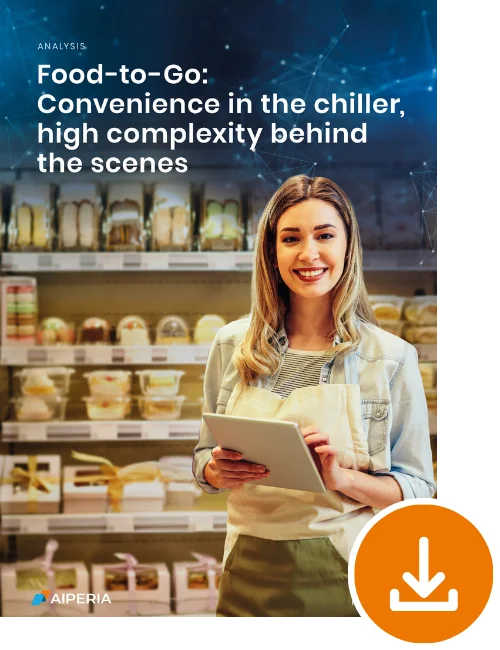

‘Food-to-Go: Convenience in the chiller, high complexity behind the scenes’

White paper: ‘Food-to-Go: Convenience in the chiller, high complexity behind the scenes’

How retailers and manufacturers can use AI-driven planning to ensure availability, reduce waste, and increase contribution margins.

Food-to-Go is one of the fastest-growing segments in grocery retail. At the same time, short shelf lives, volatile demand, seasonal effects, and complex cold chains create major challenges for planning and distribution. Different store formats, local catchment areas, and daily fluctuations further increase complexity and make precise control difficult.

How can retailers keep chiller shelves full across all stores without driving up waste?

Our new white paper explains why traditional planning approaches often fall short, and how AI-based planning can tame this complexity.

Cover Whitepaper

In this white paper, you will learn:

  • About the economic potential of food-to-go products
  • Which factors make planning in the ultra-fresh segment so challenging
  • How AI-driven planning can increase availability, reduce waste, and boost contribution margins by 12–14%

👉 Download now for free

Food-to-Go: A growth driver in grocery retail

Convenience products such as sandwiches, wraps, sushi, and ready-to-eat salads are becoming increasingly popular with consumers. This category consistently grows faster than the overall market and is a key driver of both traffic and revenue.

Food-to-Go also offers attractive margins—provided that product availability and stock levels are optimally managed.

High complexity behind the chiller

In the ultra-fresh segment, several challenging factors come together at the same time: strongly fluctuating demand, short shelf lives, seasonal effects and complex production and delivery cycles.

Add to that the heterogeneous store landscape, ranging from small convenience stores to large supermarkets with varying ranges and demand patterns, and manual planning becomes unreliable.

How data-driven planning helps

The white paper shows how AI-driven planning reduces this complexity. Using hundreds of influencing factors, demand forecasts, assortments, and delivery quantities are continuously optimized.

Retailers and manufacturers benefit from:

  • Higher product availability
  • Significantly reduced waste
  • Improved profitability of the Food-to-Go category

Real-world results

Using a real branch network, the white paper shows the potential of data-based management.

Using a real store network as an example, the white paper highlights measurable impacts:

  • Significant reductions in waste
  • Contribution margin improvements of over 10%
  • Noticeable relief in operational planning

Learn how to master the complexity of the Food-to-Go segment and unlock the full potential of your chilled displays.

👉 Download now for free